
Modern businesses are no longer managing employees with spreadsheets, disconnected tools, manual attendance registers, or outdated HR workflows. In 2026, organizations are rapidly shifting toward intelligent Human Resource Management Systems (HRMS) to improve workforce productivity, reduce operational costs, strengthen compliance, and create better employee experiences.
Whether a company has 20 employees or 20,000, HR operations have become increasingly complex. Hybrid work models, remote teams, AI-driven recruitment, payroll compliance, employee engagement, performance analytics, and workforce automation now require a centralized digital ecosystem. This is exactly where HRMS software becomes essential.
Businesses that fail to modernize HR infrastructure often face:
- Payroll inaccuracies
- Employee dissatisfaction
- Poor attendance tracking
- Compliance risks
- High employee turnover
- Slow hiring processes
- Data management chaos
- Reduced productivity
- Communication gaps
- Security vulnerabilities
An advanced HRMS platform solves these operational challenges while helping companies scale efficiently.
This article explores the top benefits of HRMS software in 2026, how modern organizations are using it, and why HR digital transformation is becoming a business necessity rather than an optional upgrade.
What Is HRMS Software?
HRMS (Human Resource Management System) software is a centralized digital platform that automates and manages all HR-related processes inside an organization.
A modern HRMS platform typically includes:
- Employee information management
- Attendance and leave tracking
- Payroll automation
- Recruitment and onboarding
- Performance management
- Employee self-service portals
- Compliance management
- Workforce analytics
- Shift and scheduling systems
- Expense and reimbursement tracking
- Training and learning management
- AI-powered reporting
In 2026, HRMS platforms are increasingly powered by:
- Artificial Intelligence (AI)
- Machine Learning
- Cloud Infrastructure
- Automation Engines
- Predictive Analytics
- Mobile Accessibility
- Biometric Integration
- Real-Time Dashboards
This evolution is transforming HR departments from administrative units into strategic business growth engines.
Why HRMS Software Is Critical in 2026
The workforce landscape has dramatically changed over the past few years.
Companies now manage:
- Remote employees
- Freelancers and contractors
- Distributed teams
- Global payroll structures
- Hybrid work policies
- Digital compliance requirements
- Employee wellness programs
- Data privacy regulations
Without automation, managing these operations becomes expensive, slow, and error-prone.
HRMS software provides:
- Operational efficiency
- Centralized employee data
- Process automation
- Better decision-making
- Real-time visibility
- Enhanced employee experiences
Organizations adopting advanced HRMS systems are outperforming competitors in productivity, employee retention, and workforce optimization.
1. Complete HR Process Automation
One of the biggest advantages of HRMS software is automation.
Manual HR processes consume enormous time and resources. HR teams often spend hours on repetitive tasks such as:
- Attendance calculations
- Payroll processing
- Leave approvals
- Employee record updates
- Offer letter generation
- Shift scheduling
- Compliance reporting
HRMS software automates these repetitive workflows.
Key Automation Benefits
- Faster HR operations
- Reduced manual errors
- Lower administrative workload
- Improved productivity
- Standardized workflows
- Better accuracy
Automation allows HR teams to focus more on strategic activities such as talent development and employee engagement instead of administrative tasks.
2. Centralized Employee Data Management
Employee data scattered across spreadsheets, emails, folders, and disconnected tools creates operational chaos.
Modern HRMS systems centralize all employee information into a secure unified platform.
Centralized Data Includes
- Personal employee information
- Salary records
- Attendance history
- Leave balances
- Appraisal records
- Compliance documents
- Tax information
- Training certifications
- Performance metrics
Benefits of Centralized HR Data
- Easy access to records
- Improved data accuracy
- Faster document retrieval
- Better reporting
- Enhanced security
- Simplified audits
Centralization significantly reduces information silos inside organizations.
3. Payroll Accuracy and Faster Salary Processing
Payroll errors damage employee trust and create compliance risks.
Modern HRMS software automates complex payroll calculations including:
- Salary structures
- Overtime
- Tax deductions
- Incentives
- Bonuses
- PF/ESI calculations
- Reimbursements
- Multi-location payroll
Benefits of Payroll Automation
- Accurate salary calculations
- Faster payroll processing
- Reduced compliance risks
- Automatic payslip generation
- Tax filing support
- Improved employee trust
Advanced HRMS systems also integrate directly with banking systems for automated salary disbursement.
4. Improved Employee Experience
Employee experience is becoming a major competitive advantage in 2026.
Employees expect:
- Self-service access
- Mobile-friendly HR systems
- Instant leave requests
- Transparent payroll access
- Fast approvals
- Easy communication
Modern HRMS platforms provide employee self-service portals where employees can:
- Download payslips
- Apply for leave
- Track attendance
- Update personal details
- Submit reimbursements
- Access company policies
- Monitor performance goals
Why This Matters
A better employee experience leads to:
- Higher retention rates
- Better engagement
- Increased productivity
- Improved company culture
Organizations with poor employee experiences struggle to retain skilled talent.
5. Advanced Attendance and Leave Management
Traditional attendance systems are inefficient and vulnerable to manipulation.
Modern HRMS solutions support:
- Biometric attendance
- GPS-based attendance
- Face recognition
- Mobile check-ins
- Shift scheduling
- Automated leave tracking
Key Benefits
- Real-time attendance visibility
- Reduced buddy punching
- Accurate work-hour calculations
- Simplified leave approvals
- Better workforce planning
For remote and hybrid teams, cloud-based attendance tracking has become essential.
6. Smarter Recruitment and Hiring
Recruitment in 2026 is highly competitive.
Companies need faster hiring workflows without sacrificing candidate quality.
HRMS recruitment modules help businesses:
- Post jobs automatically
- Track applicants
- Schedule interviews
- Manage candidate pipelines
- Evaluate resumes using AI
- Automate onboarding
Recruitment Benefits
- Faster hiring cycles
- Reduced hiring costs
- Better candidate management
- Improved communication
- Higher recruitment efficiency
AI-powered recruitment tools can also help identify top candidates using skill-based analysis.
7. Better Performance Management
Annual performance reviews are becoming outdated.
Modern HRMS platforms enable continuous performance management through:
- Goal tracking
- KPI monitoring
- Real-time feedback
- Employee evaluations
- 360-degree reviews
- Performance analytics
Performance Management Benefits
- Clear employee expectations
- Increased accountability
- Better productivity
- Continuous improvement
- Stronger employee development
Managers gain better visibility into workforce performance and productivity trends.
8. Workforce Analytics and Data-Driven Decisions
One of the most transformative features of modern HRMS systems is workforce analytics.
Organizations can now analyze:
- Employee productivity
- Attendance trends
- Hiring efficiency
- Attrition rates
- Department performance
- Employee engagement
- Payroll costs
Why Analytics Matters
Data-driven HR decisions improve:
- Workforce planning
- Hiring strategies
- Retention programs
- Budget forecasting
- Organizational efficiency
Predictive analytics can even identify employees at risk of leaving the company.
9. Stronger Compliance Management
Compliance regulations are becoming increasingly complex globally.
Companies must manage:
- Labor laws
- Tax regulations
- Payroll compliance
- Data privacy policies
- Employee documentation
- Audit requirements
Manual compliance management creates serious legal risks.
HRMS Compliance Benefits
- Automated compliance tracking
- Timely reporting
- Reduced legal penalties
- Audit-ready records
- Secure documentation
Modern HRMS systems help businesses remain compliant while reducing administrative pressure.
10. Cloud Accessibility and Remote Workforce Support
Cloud-based HRMS systems have become the industry standard.
Employees and HR teams can access systems from anywhere using:
- Smartphones
- Tablets
- Laptops
- Web dashboards
Cloud HRMS Benefits
- Remote accessibility
- Real-time synchronization
- Lower infrastructure costs
- Automatic updates
- Better scalability
- Disaster recovery support
This flexibility is essential for hybrid and remote-first organizations.
11. Enhanced Data Security
HR departments manage highly sensitive employee information.
This includes:
- Salary records
- Identification documents
- Bank details
- Tax information
- Medical records
- Performance reports
Modern HRMS software provides enterprise-grade security features such as:
- Role-based access control
- Data encryption
- Multi-factor authentication
- Secure cloud storage
- Audit logs
- Backup systems
Strong security protects both employees and organizations from cyber threats.
12. Increased Organizational Productivity
When HR operations become streamlined, the entire organization benefits.
Employees spend less time on administrative issues and more time on productive work.
Managers gain:
- Faster approvals
- Better visibility
- Workforce insights
- Simplified reporting
Executives gain:
- Strategic workforce analytics
- Cost optimization insights
- Better resource allocation
This creates operational efficiency across departments.
13. Scalable Growth for Expanding Businesses
As companies grow, manual HR systems become unsustainable.
HRMS software scales with organizational growth.
Whether adding:
- New employees
- Multiple office locations
- International teams
- New departments
The system can adapt without major operational disruptions.
Scalability Benefits
- Easier expansion
- Centralized operations
- Consistent workflows
- Simplified management
Scalability is critical for startups and growing enterprises.
14. Better Employee Engagement and Retention
Employee retention is a major challenge in 2026.
HRMS platforms improve engagement through:
- Recognition systems
- Feedback tools
- Learning programs
- Career development tracking
- Employee surveys
- Wellness initiatives
Retention Benefits
- Reduced attrition
- Higher morale
- Improved loyalty
- Better workplace culture
Employees who feel supported are more likely to stay long-term.
15. AI-Powered HR Operations
Artificial Intelligence is reshaping HR management.
Modern HRMS platforms now use AI for:
- Resume screening
- Employee sentiment analysis
- Predictive attrition analysis
- Workforce forecasting
- Chatbot support
- Automated recommendations
AI Benefits in HRMS
- Faster decision-making
- Reduced bias
- Improved hiring accuracy
- Better workforce planning
- Enhanced employee support
AI-driven HR systems are becoming a major competitive advantage.
Common Problems Companies Face Without HRMS Software
Organizations relying on outdated HR systems often struggle with:
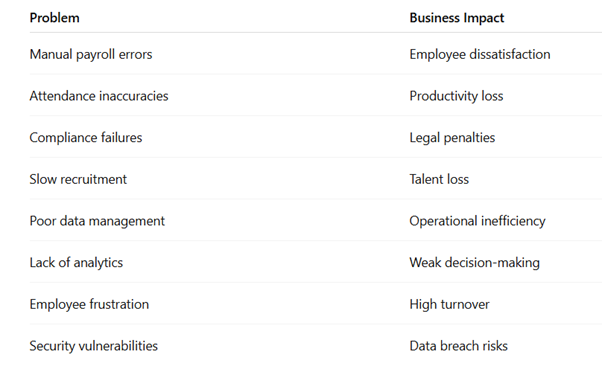
These challenges become more severe as organizations scale.
Industries Rapidly Adopting HRMS Software in 2026
HRMS adoption is growing across industries including:
- IT and Software Companies
- Healthcare Organizations
- Manufacturing Industries
- Educational Institutions
- Retail Businesses
- Logistics Companies
- Financial Services
- Construction Firms
- Startups and SMEs
- BPO and Outsourcing Companies
Every industry managing employees can benefit from HR automation.
Key Features Businesses Should Look for in HRMS Software
When choosing an HRMS platform, companies should prioritize:
Essential Features
- Payroll automation
- Attendance tracking
- Leave management
- Employee self-service
- Recruitment management
- Mobile accessibility
- Cloud infrastructure
- Analytics dashboards
- Security controls
- Compliance tools
Advanced Features
- AI-powered analytics
- Biometric integration
- Workflow automation
- API integrations
- Multi-location support
- Multi-currency payroll
- Chatbot assistance
- Performance tracking
The right HRMS system should align with both current and future business needs.
The Future of HRMS Software
The future of HRMS technology is moving toward:
- AI-first HR systems
- Predictive workforce analytics
- Hyperautomation
- Employee experience platforms
- Voice-enabled HR assistants
- Blockchain-based employee verification
- Real-time performance intelligence
- Personalized employee engagement systems
Organizations investing early in HR digital transformation will gain long-term competitive advantages.
Final Thoughts
In 2026, HRMS software is no longer just an HR tool — it is a strategic business infrastructure.
Modern organizations need:
- Faster operations
- Smarter workforce management
- Better employee experiences
- Real-time analytics
- Strong compliance systems
- Secure employee data management
HRMS platforms help companies achieve all of these objectives while improving efficiency, reducing costs, and supporting scalable growth.
Businesses that continue relying on outdated HR processes risk operational inefficiency, employee dissatisfaction, compliance challenges, and slower growth.
As workforce management becomes increasingly data-driven and technology-focused, adopting a modern HRMS solution is becoming essential for long-term success.
To build scalable, intelligent, and future-ready HR management solutions, explore professional HRMS software development services from Dreamtree-Org ™:
https://www.dreamtreeglobal.com/services/hrms-software-development
Dreamtree-Org™ shares practical engineering and delivery insights across web, cloud, and product development—focused on measurable outcomes and enterprise-quality execution.
HRMS software in 2026 is revolutionizing how businesses manage their workforce by automating HR processes, improving employee experience, and enabling data-driven decisions. From payroll and recruitment to performance tracking and compliance, HRMS solutions help organizations operate more efficiently and scale faster. Adopting a modern HRMS system is essential for businesses looking to stay competitive in today’s digital landscape.
HRMS software is a powerful tool that helps businesses automate and manage HR processes efficiently. From payroll to performance tracking, it improves productivity, reduces costs, and enhances employee experience—making it essential for modern organizations in 2026.